
Introduction
Paver block manufacturing is a practical business where product quality and production consistency matter every day.
Whether you are supplying blocks for a house driveway, parking area, walkway or commercial project, customers expect the blocks to have a good shape, finish and consistent colour.
But good paver blocks do not depend on just one material or machine.
The raw materials, mixing, moulds, compaction and quality checking all play a role.
In this guide, we will explain the basic paver block manufacturing process, materials used and simple quality tips. The goal is to help manufacturers understand the process without making it unnecessarily technical.
What Is Paver Block Manufacturing?
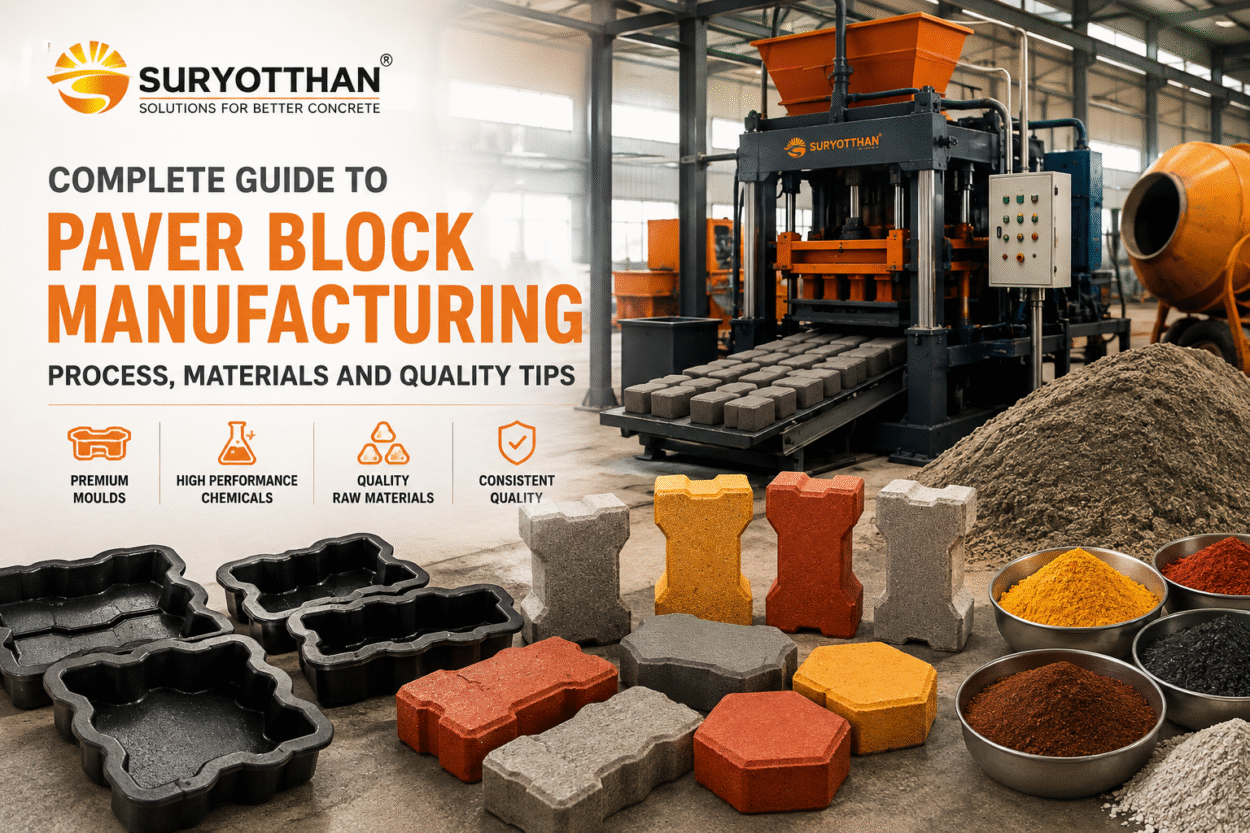
Paver block manufacturing is the process of producing concrete paving blocks in different shapes, sizes and colours.
The basic process involves preparing a concrete mixture, placing it into a suitable mould, compacting the finished blocks.
Manufacturers may also use paver block chemicals and iron oxide pigments depending on the required product and application.
The exact production method can vary from one manufacturing unit to another. It depends on the equipment, block design, raw materials and required product specifications.
For Indian manufacturers, concrete paving blocks are covered under BIS IS 15658:2021. Manufacturers should refer to the applicable standard and requirements for their products.
Materials Used in Paver Block Manufacturing
A typical paver block manufacturing setup uses several basic materials.
Cement
Cement acts as the binding material in the concrete mix.
Its quality and storage condition are important. Cement should be stored properly and protected from moisture.
Aggregates
Aggregates form a major part of the concrete mixture.
Their size, cleanliness and consistency can affect the final paver block.
Using consistent raw materials also makes it easier to maintain consistent production from one batch to another.
Water
Water is required for mixing and cement hydration.
However, adding more water does not automatically produce better blocks. Water quantity needs to be controlled according to the selected mix and production requirements.
Paver Block Chemicals
Manufacturers may use suitable chemicals or admixtures for specific production requirements.
The right product should be selected according to the concrete mix and manufacturing process.
Read more: [Paver Block Chemicals]
Iron Oxide Pigments
Iron oxide pigments are used when manufacturers want to produce coloured concrete products.
They can be used to create shades such as red, yellow, black and brown depending on the pigment and application.
Read more: [Imported Iron Oxide Pigments]
Paver Block Moulds
The mould gives the paver block its shape and design.
Manufacturers can choose different designs according to their product range and customer requirements.
Read more: [Rubber Paver Block Moulds]
Basic Paver Block Manufacturing Process
The manufacturing process can be understood through a few basic stages.
1. Material Selection
Start with suitable and consistent raw materials.
Check the condition of cement and aggregates before production. If the quality of raw materials keeps changing then maintaining consistent finished products becomes more difficult.
2. Mixing
The selected materials are mixed according to the required production mix.
Consistent mixing is important because uneven mixing can affect the finished blocks.
A busy factory may be under pressure to complete a large order quickly. Still, rushing the mixing stage can create problems later.
3. Adding Chemical and Pigment
If the production requires a chemical or pigment then it should be added according to the product instructions and manufacturing requirement.
For coloured blocks, consistent pigment addition and mixing are especially important for maintaining a uniform appearance.
4. Mould Filling
The prepared mixture is placed into the selected paver block mould.
The mould should match the required design.
For example, if you are producing a Zig Zag paver block then the mould should be designed for that particular shape.
5. Compaction
The concrete is compacted using the available production equipment.
Proper and consistent compaction helps the material fill the mould correctly.
The exact method depends on the machinery and production setup.
6. Demoulding
After forming and compaction, the blocks are removed from the mould.
Careful handling is important at this stage because rough handling can damage edges and corners.
7. Quality Checking
The finished blocks should be checked before dispatch.
Depending on the product and applicable requirements, manufacturers may check aspects such as:
- Shape
- Dimensions
- Surface appearance
- Colour
- Texture
- Strength
- Water absorption
- Other applicable performance requirements
Regular checking helps identify production problems before the complete batch reaches the customer.
What Affects Paver Block Quality?
Several factors can affect the final quality of paver blocks.
Consistent Raw Materials
Changes in raw materials can affect production consistency.
Proper Mixing
The materials need to be mixed consistently from batch to batch.
Suitable Moulds
The mould should match the required design and production requirement.
Consistent Compaction
The production process should be controlled so the mixture is properly formed inside the mould.
Regular Quality Checking
Checking finished blocks helps manufacturers identify problems before dispatch.
Common Mistakes in Paver Block Manufacturing
Some problems are caused by small changes that are repeated throughout production.
Common mistakes include:
- Changing material quantities without proper control
- Ignoring damaged or worn moulds
- Uneven mixing
- Inconsistent pigment addition
- Using chemicals without understanding their recommended application
- Rushing the curing stage
- Not checking finished products regularly
When a problem appears, it is better to find its actual cause instead of immediately changing several materials at once.
Simple Tips for Better Paver Block Production
If you want more consistent production, start with the basics.
1. Keep raw materials consistent.
Record major changes in materials whenever possible.
2. Maintain a repeatable mixing process.
Avoid random changes from one batch to another.
3. Check mould condition regularly.
A mould should be suitable for the required design and production process.
4. Follow product instructions.
Use chemicals and pigments according to their intended application.
5. Check finished blocks before dispatch.
It is better to identify a problem inside the factory than after delivery to the customer.
Frequently Asked Questions
What materials are used in paver block manufacturing?
Common materials include cement, aggregates and water. Manufacturers may also use suitable chemicals and iron oxide pigments depending on the required product.
What is the role of a paver block mould?
A paver block mould gives the concrete its required shape and design. The mould should be selected according to the product design and production requirements.
Why are chemicals used in paver block manufacturing?
Suitable chemicals or admixtures may be used for specific concrete production requirements. The correct product depends on the mix and manufacturing process.
Why are iron oxide pigments used?
Iron oxide pigments are used to produce coloured concrete products. They can provide different shades depending on the pigment and application.
How can I improve paver block quality?
Focus on consistent raw materials, proper mixing, suitable moulds, controlled production and regular quality checking.
Conclusion
Good paver block manufacturing is not about one product alone.
It is about maintaining consistency throughout the production process.
Suitable materials + proper mixing + the right mould + controlled production + quality checking can help manufacturers work towards more consistent products.
If you are looking to improve your paver block production, start by reviewing the complete process instead of changing only one material.
Looking for Paver Block Manufacturing Products?
Suryotthan supplies products for paver block manufacturers including:
Rubber Paver Block Moulds
Paver Block Chemicals
Imported Iron Oxide Pigments
We supply manufacturers across Rajasthan and India.