
Paver Block Chemical: Benefits, Uses and Complete Guide for Manufacturers
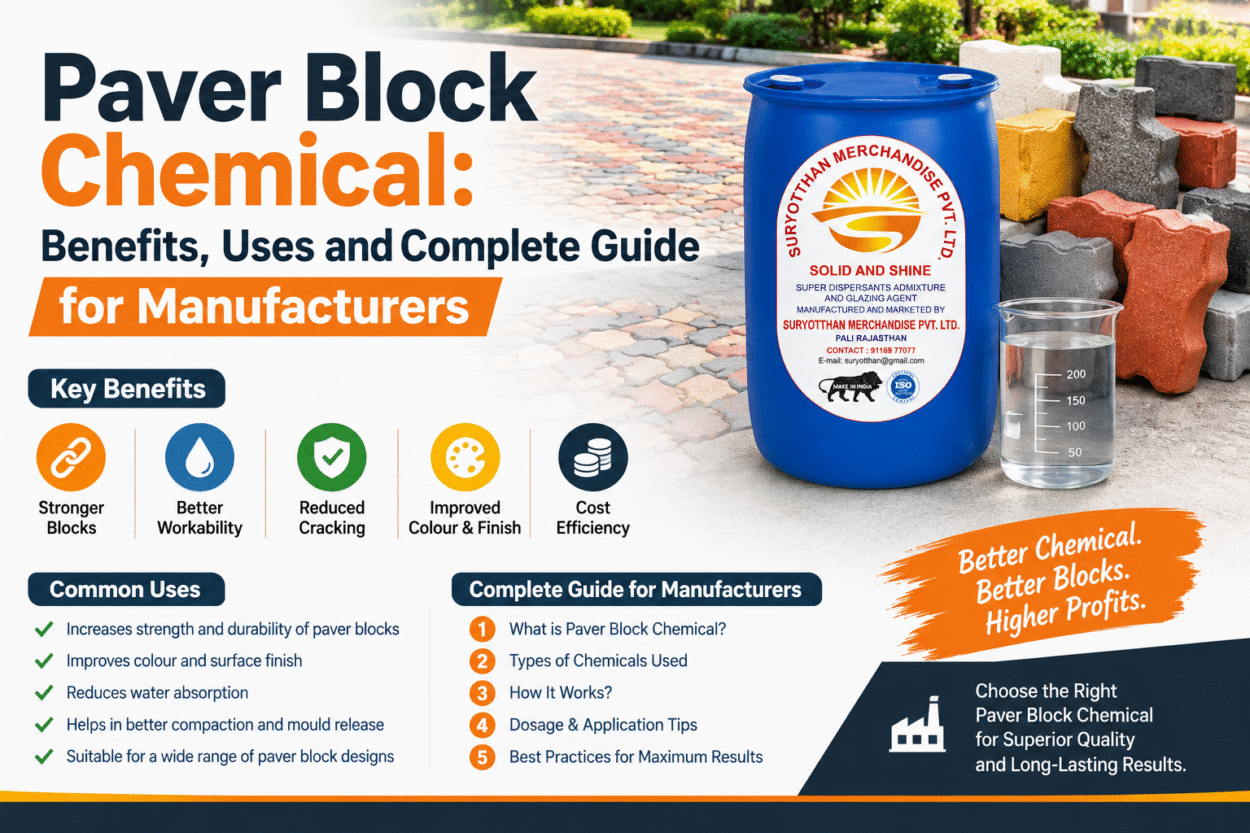
Paver block manufacturing is a combination of good raw materials, proper mixing, moulding, compaction and curing. Along with these factors, a suitable paver block chemical can also support different production requirements.
Manufacturers may use suitable chemicals to help with easy demoulding, better finish and shining, faster drying, stronger blocks, cleaner edges and a smooth surface.
But choosing a chemical should not be based only on price or appearance. The product should be suitable for your manufacturing process and should be used according to the recommended application.
In this guide, we will explain what paver block chemicals are, their major benefits, how they can fit into production and what manufacturers should check before choosing one.
What Is Paver Block Chemical?
Paver block chemical is a chemical product used as part of the paver block manufacturing process for specific production requirements.
Depending on the product and its intended application, a suitable chemical can support different aspects of manufacturing.
These may include:
- Easy demoulding
- Better finish
- Surface shining
- Faster drying
- Stronger blocks
- Cleaner edges
- Smooth surface
- Better production consistency
The exact result depends on the formulation, dosage, application method and overall manufacturing conditions.
Therefore, manufacturers should first understand what the chemical is designed to do before selecting a product.
What Is the Role of Chemical in Paver Block Manufacturing?
A paver block chemical is only one part of the complete manufacturing process.
The final quality of a paver block depends on several factors such as:
- Cement quality
- Aggregate quality
- Water quantity
- Mixing consistency
- Mould quality
- Compaction
- Chemical application
- Pigment quality
- Curing
- Handling
A suitable chemical can support specific production requirements, but it cannot replace proper manufacturing practices.
For example, if the mix is inconsistent from one batch to another, the final blocks may also show variation even when the chemical is suitable.
Benefits of Paver Block Chemical
The main reason manufacturers consider chemical products is to support specific production requirements.
Let us look at the major benefits.
1. Easy Demoulding
Easy demoulding is one of the important benefits manufacturers may look for in a suitable paver block chemical.
After forming and compaction, the fresh paver block needs to be removed from the mould.
If the block does not release properly, it can affect production and may lead to surface or edge damage.
A suitable chemical can help support smoother release from the mould when it is used correctly.
This can make the demoulding stage easier and help maintain a more consistent production process.
2. Better Finish and Shining
The surface appearance of a paver block is important for many manufacturers.
A clean surface with a good finish can make the finished paver block look more attractive.
A suitable chemical can be part of the production process when manufacturers are looking for a better finish or desired surface appearance.
However, shining alone should not be treated as proof of complete product quality.
The final appearance can also depend on:
- Mould quality
- Cement
- Aggregates
- Mix consistency
- Pigment
- Compaction
- Curing
How Does Paver Block Chemical Help With Surface Finish?
Surface finish is something customers can notice immediately when they look at a paver block.
A smooth and clean surface can improve the visual appearance of the finished product.
However, surface finish is not controlled by chemical alone.
The condition of the mould, quality of materials, mix consistency and compaction also play an important role.
Therefore, manufacturers should consider the chemical as one part of the complete production process.
3. Faster Drying
Drying is another important stage in paver block production.
Depending on the product and application, a suitable chemical can help support the drying requirements of the manufacturing process.
For manufacturers, a controlled and efficient production cycle can be important when producing paver blocks regularly.
However, drying can also depend on:
- Weather
- Temperature
- Moisture
- Mix composition
- Production conditions
- Curing method
Therefore, the chemical should be used according to the recommended application for that specific product.
Can Paver Block Chemical Help Make Stronger Blocks?
Block strength is an important consideration for paver block manufacturers.
A suitable chemical may support the manufacturing process where stronger and more consistent blocks are required.
But it is important to understand that chemical alone does not determine block strength.
Other important factors include:
- Cement quality
- Aggregate quality
- Mix proportion
- Water quantity
- Compaction
- Curing
A proper manufacturing process is therefore essential
4. Stronger Paver Blocks
Depending on the product and its intended application, a suitable chemical can support the production of stronger paver blocks.
The objective should be to maintain a controlled manufacturing process rather than simply increasing chemical quantity.
More chemical does not automatically mean a stronger block.
The recommended application should always be followed.
Cleaner Edges and Reduced Edge Damage
Clean edges are important for the appearance and handling of paver blocks.
During demoulding, fresh blocks can sometimes experience edge damage when the release is not smooth or the production process is inconsistent.
A suitable chemical can support smoother demoulding and may help reduce edge damage during the release stage.
However, edge quality also depends on:
- Mould condition
- Mix consistency
- Compaction
- Demoulding method
- Handling
5. Smooth Surface
A smooth surface can give a paver block a cleaner and more finished appearance.
The mould has direct contact with the surface of the fresh paver block. Therefore, mould quality and condition are important.
A suitable chemical can support the required surface finish when used as recommended.
For manufacturers producing decorative or coloured paver blocks, surface appearance can be especially important.
Customers can easily notice:
- Smoothness
- Texture
- Colour
- Finish
- Edge quality
Summary of Paver Block Chemical Benefits
A suitable paver block chemical may support multiple production requirements.
| Benefit | Production Consideration |
|---|---|
| Easy Demoulding | Supports smoother release from mould |
| Better Finish | Supports desired surface appearance |
| Shining | Can support desired visual finish |
| Faster Drying | Can support drying requirements depending on product |
| Stronger Blocks | Can support strength-related production requirements |
| Cleaner Edges | May help reduce edge damage during demoulding |
| Smooth Surface | Supports desired surface finish |
| Production Consistency | Can become part of a controlled production process |
Important: Actual results depend on the specific product, dosage, raw materials and manufacturing conditions.
How to Choose the Right Paver Block Chemical
choosing a chemical should start with your production requirement.
Step 1: Identify Your Main Requirement
Ask yourself what you need from the product.
Is your main requirement:
- Easy demoulding?
- Better finish?
- Shining?
- Faster drying?
- Stronger blocks?
- Cleaner edges?
- Smooth surface?
Step 2: Understand Your Production Process
Consider your:
- Raw materials
- Mixing method
- Mould type
- Compaction process
- Curing method
- Production volume
Step 3: Check Product Application
Understand how the chemical is supposed to be used.
Ask about:
- Recommended quantity
- Mixing/application method
- Suitable production conditions
- Storage
- Handling
Step 4: Do Not Choose Only by Price
The cheapest chemical may not necessarily be the right product for your production.
Look at suitability and intended application along with price.
Step 5: Discuss Your Requirement With the Supplier
A supplier should understand what you manufacture and what you are trying to achieve.
This can help you select a more suitable product.
Common Mistakes When Using Paver Block Chemical
Mistake 1: Choosing Only by Price
Price is important but it should not be the only deciding factor.
Mistake 2: Choosing Only by Shining
A shiny appearance can attract attention but it does not tell you everything about product performance.
Mistake 3: Using Too Much Chemical
More chemical does not automatically mean better results.
Always follow the recommended usage.
Mistake 4: Ignoring the Mould
Poor mould condition can affect demoulding and surface finish.
Paver Block Chemical From Suryotthan
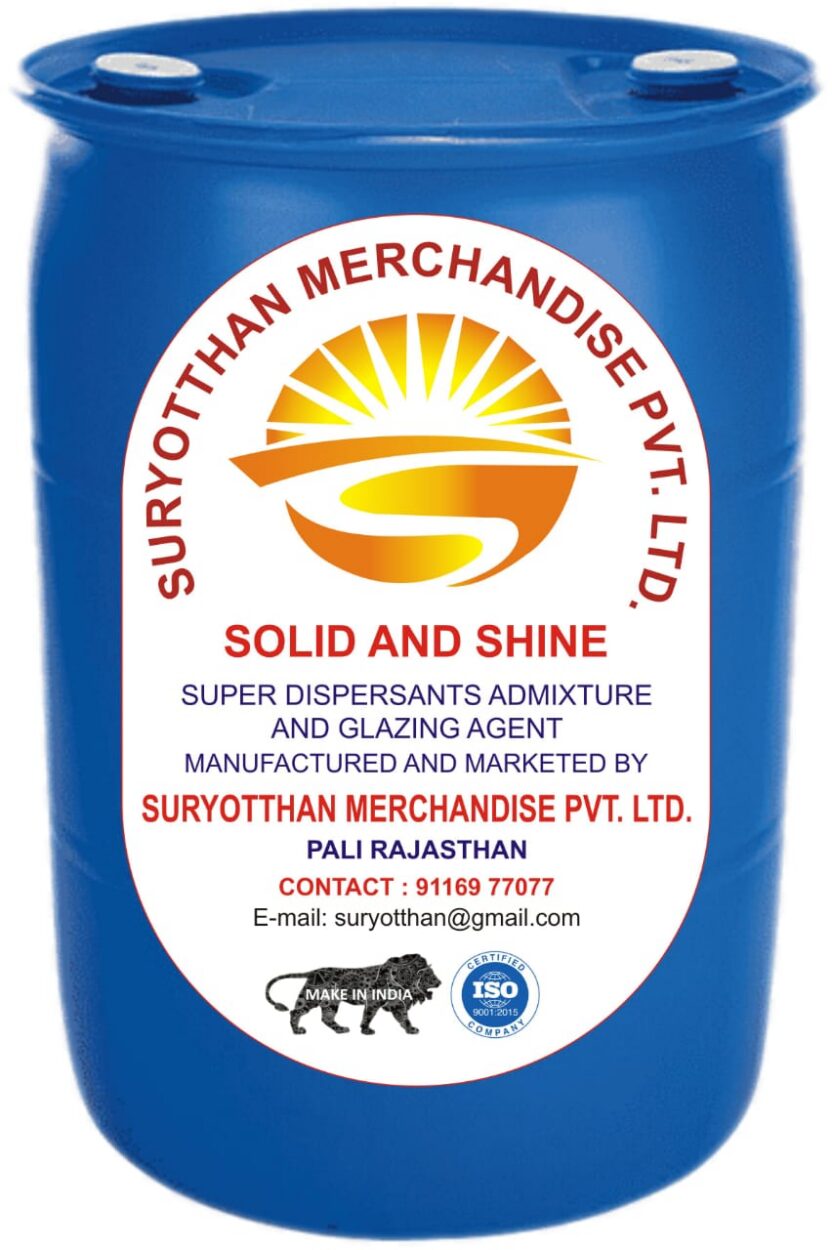
Suryotthan provides products for manufacturers involved in paver block production.
If you are looking for a chemical for requirements such as easy demoulding, better finish, shining, drying or stronger blocks, you can discuss your production requirements with our team.
Our focus is to understand the application and provide relevant product information.
Looking for Paver Block Chemical?
Looking for a suitable chemical for your paver block manufacturing requirements?
Talk to Suryotthan about your production requirement and get product details.